
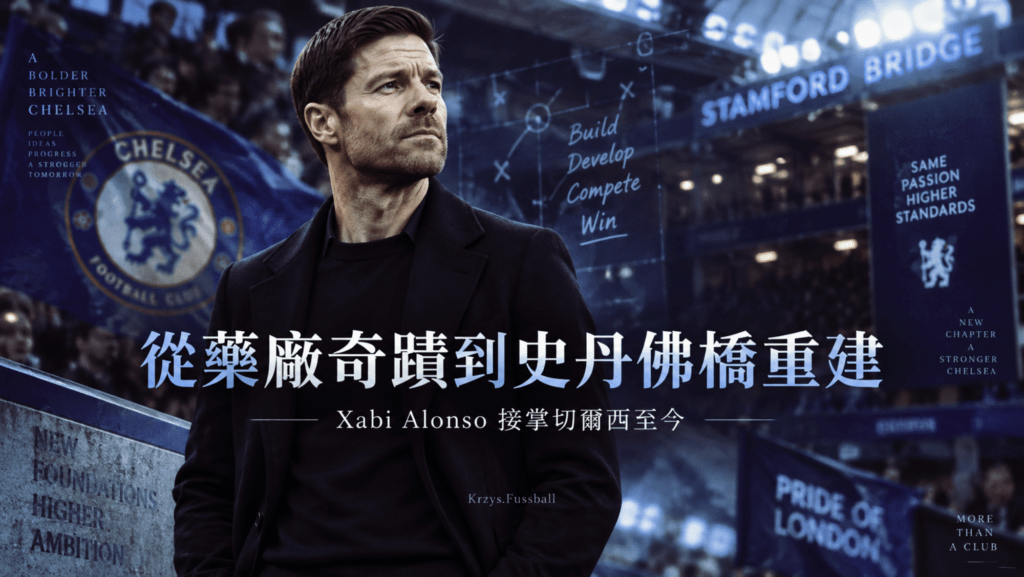
In-depth analysis of Xabi Alonso's time managing Chelsea: An attacking revolution is taking shape, but why is "defensive imbalance" the biggest concern for the Blues' title aspirations?
AbstractXabi Alonso officially took over at Stamford Bridge in the summer of 2026, quickly injecting a new tactical system combining speed and vertical depth into a Chelsea team that had been struggling. However, after a honeymoon period of consecutive wins at the start of the season, serious structural weaknesses in their defense were exposed in matches against Arsenal and Hull City. Behind their four-game winless streak in the league, what tactical costs and injury challenges has the Blues faced?
Tactical Reset: Why Does Stanford Bridge Need Alonso's Winner DNA?
After a disappointing 2025/26 season, Chelsea finished 10th in the Premier League, missing out on European competitions for the first time in the club's history. The management's decision to sign Xabi Alonso to a four-year contract at this crucial moment is clear: the club needs not a short-term fix, but a leader capable of fundamentally rebuilding its playing philosophy, team culture, and championship competitiveness from the ground up.
With a stellar resume, having led Bayer Leverkusen to their first-ever Bundesliga title and subsequently managed Real Madrid, Alonso arrived in London already possessing a proven track record of tactical authority. Alonso's core coaching goal was quite simple: to reshape the dressing room culture and get Chelsea back into the top title race in the Premier League and even Europe in the shortest possible time.
Sports betting: RM Casino
Sports betting: RM Game City
Say Goodbye to Ineffective Passing and Possession: A Revolution in Offensive Attacks Involving High-Speed Advancement and Wide Wings
Contrary to expectations of a traditional Spanish possession-based style, Alonso did not mold Chelsea into a team that simply piled on possession. From preseason friendlies to the start of the Premier League season, this new Chelsea has displayed distinct tactical characteristics:
- Accelerate the progressThe pace of passing from the backfield is greatly accelerated, and ineffective lateral passing in midfield is reduced, with a focus on finding vertical penetration routes as soon as possible.
- Spatial stretchingThe full-backs and wingers work together seamlessly, maximizing the use of the pitch width and creating space for central players to make forward runs.
- Body and speedThe goal is to integrate the team's young talent with immediate impact, injecting more sprints, physical challenges, and off-the-ball movement.
This style of play aligns perfectly with his core logic during his time at Bayer Leverkusen—not pursuing extreme dominance, but rather, with a well-structured formation, delivering the ball into the opponent's territory with maximum efficiency.
In the first two rounds of the season, Chelsea started with a perfect record, and Alonso was even quickly shortlisted for the Premier League Manager of the Month in August. With a smooth League Cup run and the seamless integration of new signings like Morgan Rogers, Stamford Bridge quickly regained its long-lost attacking aggression and high-tempo energy.
Warning signs after the honeymoon period: The defensive costs exposed by Arsenal and Hull City
A high-return attacking structure inevitably comes with extremely high defensive risks. The 1-2 away defeat to Arsenal served as Chelsea's first wake-up call. The Blues scored after just 77 seconds, but failed to control the tempo under pressure, ultimately losing all three points. Conceding seven goals in the first three Premier League matches directly points to a shaky defense.
The subsequent 2-2 draw at home against newly promoted Hull City further highlighted the inherent contradictions between their attack and defense:
- Losing control after taking the leadAfter Rogers took the lead, the team was unable to slow down the pace and control the game effectively, and Mohammed Belloumi repeatedly exploited gaps in the backfield to punish them. In the end, they could only manage a hard-fought equalizer through a goal from João Pedro.
- No clean sheets yetAfter four rounds of league matches, Chelsea's defensive clean sheet record remains at zero.
- Architecture costWhen the wing-backs push forward significantly and the midfielders move up to press first, once the opponent penetrates the pressing in the attacking third, a huge open area will be exposed behind the center-backs and defensive midfielders.
Chelsea now possesses top-tier ability to tear apart defenses, but lacks the "maturity of controlling the game" essential for top teams—allowing the game to become suffocating, boring, and safe after taking the lead.
Injury crisis and midfield barrier: the lack of Caicedo's link-up play is a major weakness.
Alonso's system places extreme demands on the midfielders' positioning and covering coordination, and injuries have undoubtedly delayed the full implementation of this tactical system.
| Injured players | Tactical Impact Key Points |
| Moises Caicedo | He is the key safety feature of the high-pressing system; without his coverage and sweeping, the team's transition defense is easily broken through. |
| Marco Palestra | Limited depth in wing rotations affects the stamina maintenance and tracking efficiency of full-backs when they push forward. |
| Jordan Henderson | The lack of experienced locker room leaders prevents them from helping the young players on the field adjust the pace of the game when they are leading. |
| Emmanuel Emegha | The reduced number of attacking options in the attacking third diminished the threat of counter-attacking variations in the later stages of the game. |
Alonso's decision to remain patient with the injury situation and avoid taking risks by bringing key players back early demonstrates his team-building philosophy of focusing on the team's long-term development rather than dwelling on the gains and losses of a single game.
The challenge facing Alonso in this era: How to transform "brilliance" into "victory"?
It's too early to judge Alonso's start at Chelsea, to say whether it was a success or a failure. Objectively speaking:The Blues have the tactical framework of Alonso, but have not yet reached the level of maturity he envisions.
The direct attacks in the frontcourt, the width of the flanks, and the adventurous attacking desire have been activated, but the high degree of synchronization between attack and defense, and the airtight sense of order when leading, that we had at Leverkusen in the past still needs time to develop.
Alonso's real test at Stamford Bridge isn't getting these talented young players to produce eye-catching attacking plays, but rather how to translate that brilliance into a consistent, controllable style of play that can win trophies in a long season. Chelsea have rediscovered their vitality, and the next challenge is learning how not to so easily relinquish control to their opponents.
🔥Popular Articles:Flames of war reignited! The 2026–27 European Top Five Leagues make a strong return.